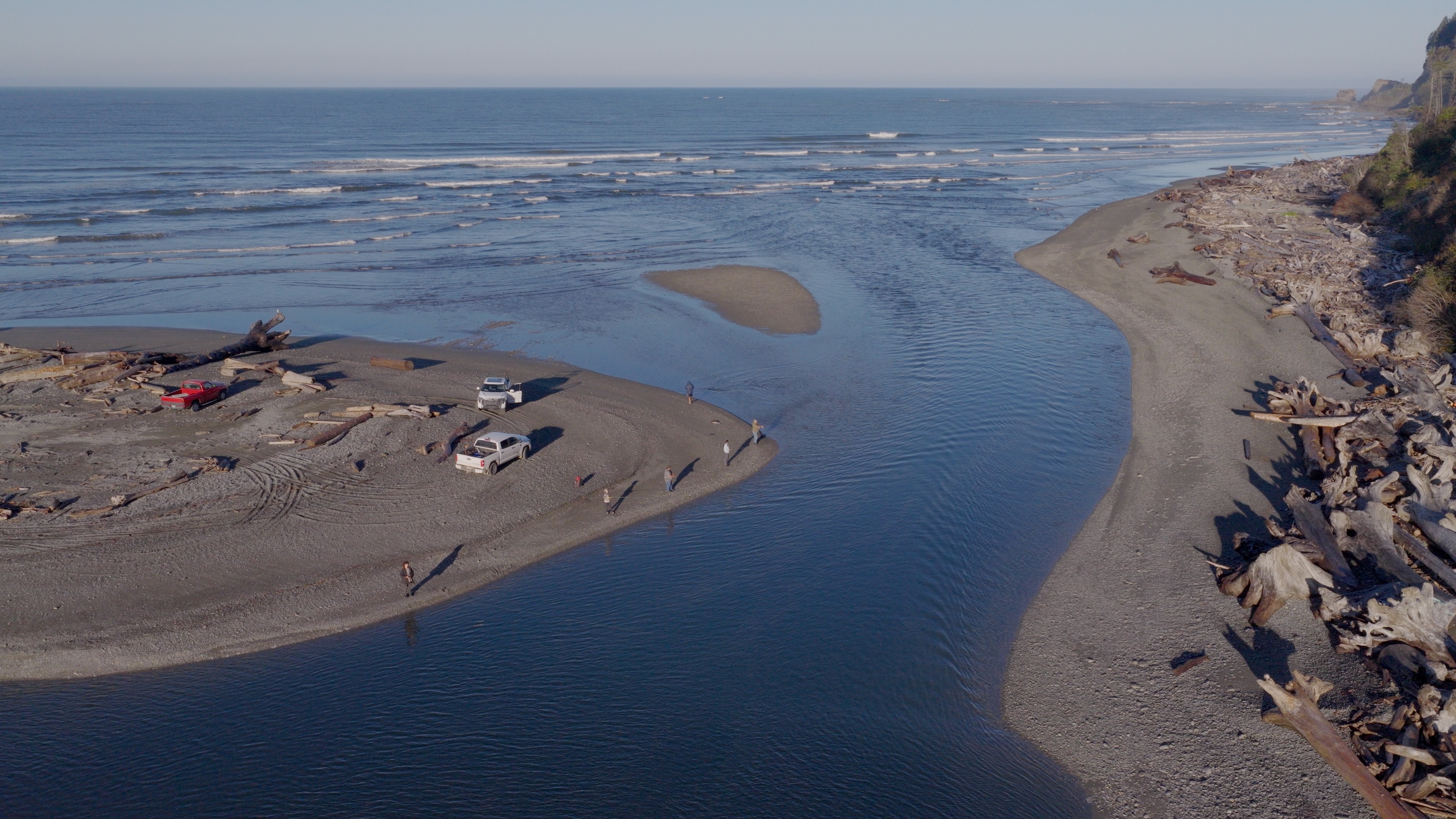
The Quinault Indian Nation is a sovereign, federally recognized Indian Nation on the Pacific coast of Washington's Olympic Peninsula and a signatory to the Treaty of Olympia. Since time immemorial, our people have lived along the Quinault and Queets rivers, around Lake Quinault, and on the Pacific shore, where the rainforest meets the rivers and the rivers meet the sea.
Our ancestors signed the treaty to protect this home for generations they could only imagine, and we welcome you to learn what it means to us today.
Our creation stories tell us we came from a vast distance out in the ocean, and our people have lived on this coast ever since. Along the Quinault and Queets rivers, around Lake Quinault, and on the Pacific shore, our families fished, hunted, and gathered for countless generations. The blueback salmon, cedar, elk, and camas that sustain us are our relatives, and we care for them as they have always cared for us.
We are a seagoing people. Our ancestors were navigators, whalers, and traders who traveled the coast in cedar canoes, north toward Vancouver Island and south past the Columbia River, as far as California. They carried dried razor clams, salmon, and cedar bark to trade, and came home with goods, news, and family ties.
To our ancestors, the ocean was never the edge of the world but a road linking them to neighbors up and down the coast, whose languages many of them spoke.
Today, the Quinault Indian Nation brings together descendants of seven peoples: Quinault, Queets, Quileute, Hoh, Chehalis, Chinook, and Cowlitz. Long before the treaty, our ancestors were connected through marriage, trade, and shared waters, and the Quinault Nation carries those histories together.
The Quileute and Hoh tribes are separate governments today, and we honor the history we share. We have governed ourselves since the beginning, and we still do today as a sovereign nation.
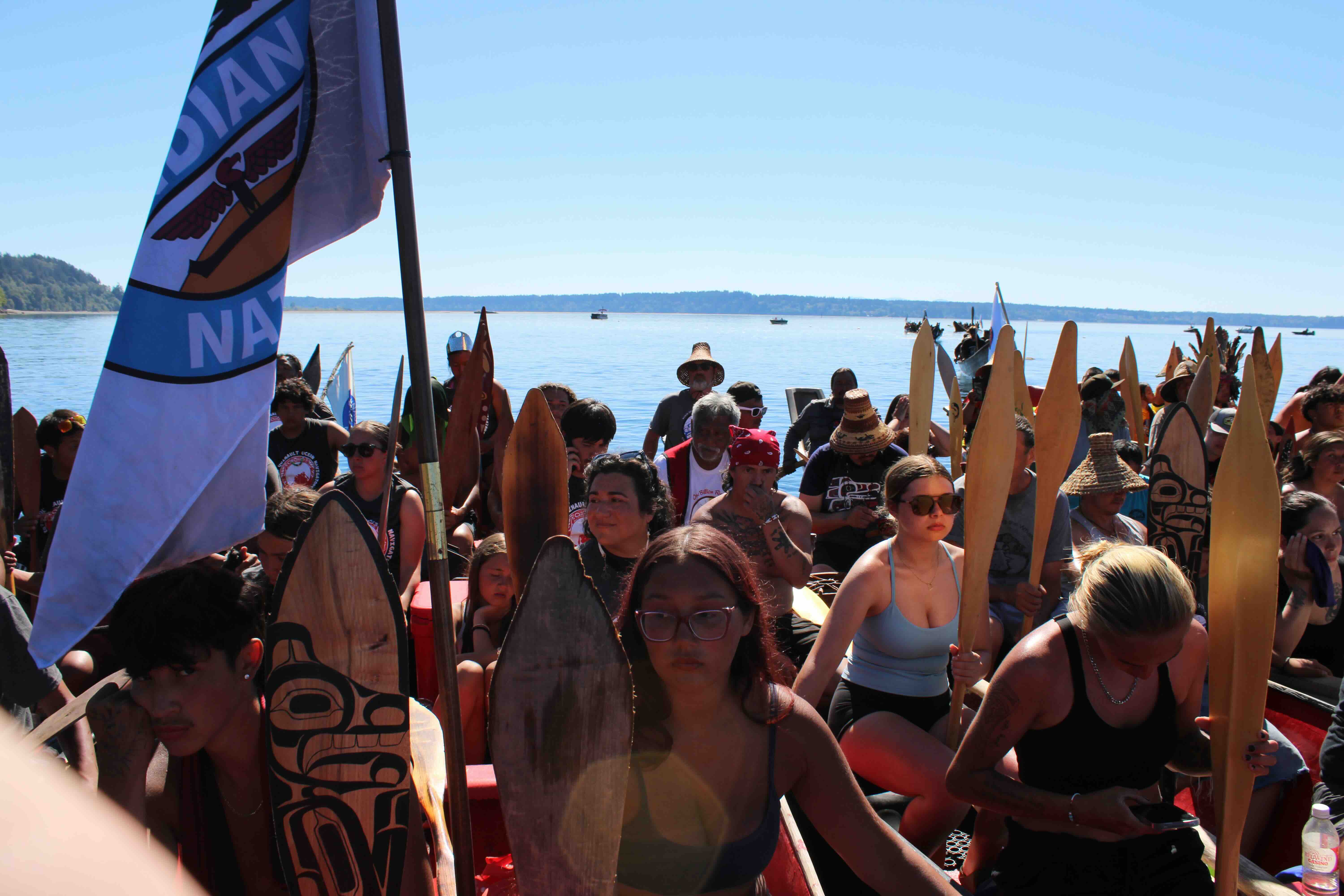
Centered in Taholah, the capital of the Quinault Nation, and in the village of Queets, over 4,000 Quinault Nation members live across the reservation, the region, and beyond. The reservation includes nearly 23 miles of Pacific coastline and roughly 208,000 acres of forest, river, and shore. We fish, harvest, and govern as our ancestors made sure we could. And we are building for the generations ahead: moving our villages to higher ground, restoring our forests and rivers, and opening doors for our young people.
"Our many histories are brought into the fold of the Nation, and we share it with everybody, so that it belongs to everyone. That's one of the house posts of this house that is the Quinault Nation."